Thursday, May 27, 2010

Women's Shiur in Monsey This Sunday Night


Rabbi Jonathan Rietti will speak this Sunday night, May 30.

Topic:
"Suffering 101"
Finding the Meaning!

Hosts: Woldiger Family
7 Pinewood Dr
Monsey, NY

Sunday May 30, 2010

Begins 8:30 pm

$10 Suggested Donation

For more information, call: 347-598-9592 or 917-620-4511

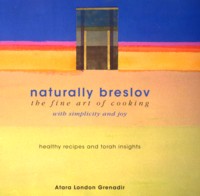
NATURALLY BRESLOV: The Fine Art of Cooking With Simplicity and Joy


Healthy Recipes and Torah Insights

$22.00 available here

Oklahoma-born Atara Grenadir is a fine artist and painter, using oils and acrylics, who has exhibited her works throughout the U.S. She learned valuable cooking techniques at the New York Macrobiotic Center and the Gourmet Cooking School. Her search for new art forms and personal expression led her to explore the teachings of Rebbe Nachman of Breslov. The belief that “less is more” that had permeated her paintings and her diet now found its counterpart in the spiritual realm – living with simplicity and joy.

Description: A cookbook of easy-to-follow recipes, low-fat and sugar-free, using natural ingredients. Traditional Jewish dishes are also included. The recipes are accompanied by dazzlingly beautiful graphics of original artworks by the author, interspersed with short sayings from Rebbe Nachman. Cover art is from a series of acrylic paintings based upon the Third Temple. The recipes are from the author and other contributors.

Approach: A cookbook of healthy recipes that promotes the idea that eating consciously leads to deeper awareness of one’s higher self. Creative cooking is a spiritual experience.

Wednesday, May 26, 2010

Uman Through the Eyes of Ahron D. Weiner

Fine art photographer Ahron D. Weiner traveled to Uman for Rosh Hashanah last year and created a magnificent (and edgy) photo documentary of the wide range of people who make the yearly pilgrimage -- fervently praying, joyously dancing, eating pizza, studying Torah, strumming the guitar, screaming, sleeping on benches, and meditating on rooftops and in the fields.

The photos appear as a seven page series on his website here.

Tuesday, May 25, 2010

Rabbi Avraham Sutton, Author/Editor/Master Teacher of Jewish Mysticism, On Lecture Tour in Flatbush and Manhattan


From our friend, David Schweke of "Exciting Judaism," who organized these events:

May 26, Wednesday:

Flatbush

An Evening of Torah and the Music of Andy Statman!

Begins 8:00 pm

Congregation Sheves Achim / The Flatbush Minyan 1517 Ave. H (off East 16th St. across from Train) Brooklyn

BOTH the B & Q trains stop locally at Ave H station.

NOTE: THE AVE H STATION IS CLOSED FROM MANHATTAN.

Customers who need to exit at Avenue H should take the train to Kings Hwy and

transfer to a Manhattan-bound train.

Suggested Donation $10.00

http://www.andystatman.org/

We respectfully request full silence during the musical performance.


===========================

May 27, Thursday.

Upper West Side.

At the townhouse of David and Dina Reis
322 West 75 St., corner of Riverside Drive (entrance on W 75 St.)

ALL INVITED

ALL IN ENGLISH

$10.00 Suggested Donation.

Light Refreshments.


============================

May 28, 29

SHABBAT BEHA'ALOTEKHA

This Shabbat is Open to Host Reb Avraham!

We are working on a venue location.

If you have any ideas, please contact me ASAP.

david@ExcitingJudaism.com

Please see my website for this Shabbat info.

http://www.excitingjudaism.com/

=====================

FAREWELL EVENING

June 1, Tuesday.

Upper West Side.

8 pm

We are learning Rabbi Nachman of Breslovs' Likutey Moharan, with Special Guest,
Rabbi Avraham Sutton!

Topic: L"M, Lesson 49:

The creating of the empty space to create the world corresponds to the empty space within every person's heart. This lesson discuses why and how to fill the heart with good things, rather than clogging it. This spiritual work in turn purifies the space of creation.

Everyone will receive a Hebrew/English copy of this lesson, which you may keep.

At the townhouse of David and Dina Reis.
322 West 75 St. corner of Riverside Dr, Entrance on W 75 St.

ALL INVITED.

ALL IN ENGLISH.

$10.00 Suggested Donation.

Light Refreshments.

Thank you Dina & David & Family !

=====================

June 2, Wednesday.

Reb Avraham returns to the Holy Land.

We hope to visit you this year in Yerushalayim!

==========================

During his visit, Reb Avraham is available for private consultation,
please contact...

avraham.sutton@me.com

New Website
http://www.avrahamsutton.com/

david@ExcitingJudaism.com

Women's Group Trip to Uman This Summer!

Mrs. Miriam Fried, director of Nesia Travel of Borough Park and a Breslover since her youth, is organizing another women's group to visit Rebbe Nachman's grave site in Uman and other mekomos ha-kedoshim in the Ukraine for Tu B'Av (last week of July). Mrs. Fried has led such groups on many occasions and is a well-informed, experienced tour guide. She is a graduate of Beis Yaakov Seminary, and her husband, Reb Shlomo Zalman Dovid Fried, a"h, was a prominent figure in the Brooklyn Breslov community.

For more information, please call her at Nesia Travel: 718-633-3800

Email: DOVI123@aol.com

Men's Shiur @ Breslov Shtibel of Borough Park

Men's Shiur this Tuesday night (May 25th) from Rav Yitzchok Friedman, shlit"a

8:0-9:00 PM

Ma'ariv after the shiur

Breslov Shtibel of Borough Park (5504 - 16th Avenue)

NEW: Now you can listen to the shiur live by calling: 718-855-2424, press "1"6"1"

The Road to Uman


Translated by Dovid Sears

As the summer days pass, Breslover Chassidim and others who heed Rabbi Nachman’s clarion call are making preparations for the annual Rosh Hashanah pilgrimage to Uman, Ukraine, where Rabbi Nachman is buried. However, many people wonder why this event is such a “big deal.” How do we even know that this is what Rabbi Nachman wanted?

This classic story from Tovos Zichronos, oral histories preserved by Rabbi Avraham Sternhartz – a great-grandson of Reb Noson, grandson of the Rav of Tcherin, and one of the foremost Breslover gedolim of the twentieth century – sheds light on these issues, while lending chizuk and inspiration to those who aspire to undertake the long and sometimes arduous journey.

This unedited translation belongs to the Breslov Research Institute, which commissioned me to do a collection of such translations for the forthcoming revised edition of “Uman, Uman, Rosh Hashanah,” a practical guide for travelers to the Breslover Rosh Hashanah Gathering in Uman. (This new edition is basically ready to be printed – all it needs is a sponsor!) It is posted here by the kind permission of Rabbi Chaim Kramer, director of BRI.

That winter [in 1811, following Rebbe Nachman’s passing], as the month of Shevat approached, Reb Noson began to yearn to travel with at least a minyan to the Rebbe’s tziyun (grave site) in order to pray there on Erev Rosh Chodesh. This month is one of the four “Rosh Hashanahs” mentioned in the Mishnah, and the Rebbe had declared, “Gohr mein zakh is Rosh Hashanah . . . My entire mission is Rosh Hashanah.” Therefore, Reb Noson wanted to use this opportunity to encourage the other Breslover Chassidim to start thinking about traveling to Uman for Rosh Hashanah the coming Tishrei, concerning which the Rebbe had spoken so urgently prior to the last Rosh Hashanah of his life.

Reb Noson succeeded in persuading a few fellow Chassidim in the town of Breslov to join him on the journey. There were no trains to take in those days; so he hired a coach and horses and arranged to pay the driver by the day. The driver agreed to go wherever he was told, even if Reb Noson wished to go to Uman in a roundabout way, or to spend the night in one of the villages. When they had travelled only a mile or so from Breslov, Reb Noson instructed the driver to turn toward the village of Sidkovitz, and not take the usual route through Heisen. No one in the coach understood what Reb Noson had in mind, including the driver, but the latter had to oblige in keeping with their agreement. They arrived in Sidkovitz when it was almost time for the Minchah prayer.

A Breslover Chassid lived in this village, a follower of Rabbi Shmuel Isaac of Dashev, who had come to Uman to be with Rebbe Nachman on his last Rosh Hashanah. Reb Noson told the group that there they could daven Minchah. When they came to this man and he saw Reb Noson and the other Breslovers at his door, he was so happy that he immediately covered the dining table with his best tablecloth and lit candles as on the Shabbos in honor of his distinguished guests, particularly Reb Noson. Full of joy, he placed a bottle of spirits and a bottle of wine on the table, as well as cakes and sweets.

After they concluded the Minchah prayer, they saw that it was still possible to continue on to the next village and spend the night there. However, Reb Noson told the Chassidim, “We have a ‘business partner’ here in the inheritance that was left to us. We really must talk things over with him, so that he’ll know what a lucrative business this is!”

The host begged everyone to sit and partake of the refreshments he had served in their honor. However, the time to daven Ma’ariv had already arrived. Reb Noson said that it was prohibited to eat a meal before praying. So they prayed Ma’ariv together then and there. The host was greatly inspired by the prayers of Reb Noson and the Chassidim, who davened with fiery enthusiasm and clapped their hands, but he still did not understand why they had suddenly appeared. He thought to himself, “Just seeing and hearing how my fellow Chassidim pray Ma’ariv this way, despite their weariness from the journey, when even in the town’s synagogue the worshippers don’t pray with such intensity – that would be enough!”

After Ma’ariv, they all sat down, and the host invited Reb Noson to taste the good food and drink he had served. However, Reb Noson said, “Before we eat, there is something that I would like to say.”

He arose from his seat and addressed his host. “You were present at the last Rosh Hashanah of the Rebbe’s life, together with the holy assembly. And many of us heard from the Rebbe’s mouth on that Erev Rosh Hashanah that he wanted each one of his followers, wherever they resided, to cry out that whoever wants to be a truly good Jew, an ‘ehrlicher Yid,’ should come to him for Rosh Hashanah in Uman. He once said, ‘I myself had a mind to pick myself up and go away…’ [However, he decided not to do so because he looked forward so much to Rosh Hashanah . . . He told his followers, “I want to remain among you – and you should come to my grave” (Tzaddik #94)].

“At that time, he also said, ‘To me, the main thing is Rosh Hashanah. What can I say? There is nothing greater!’

“In the final lesson he delivered on that Rosh Hashanah (Likutey Moharan II, 8), just before he passed away, he spoke about how one must pray to God to be worthy of drawing close to a true leader in order to attain perfect faith. Similarly, in the lesson on the subject of the prostok (‘simple peasant,’ see Likutey Moharan II, 78), he stated that one must beg God to bring one close to the true tzaddik – and this was on Shabbat Nachamu, when the Rebbe was already gravely ill and knew that he was about to die. Nevertheless, he spoke this way. Plainly, all of these statements and urgings were about our continuing to come to him for Rosh Hashanah, even after his passing, until the arrival of our righteous redeemer! The Rebbe warned us that the Evil One in his deviousness established false leaders in the world, so that one doesn’t know where Moses can be found, or where Aaron can be found, namely the true leaders. For this reason, my beloved friend, we came here to forge a mighty, lifelong bond among ourselves concerning this good inheritance that remains with us!”

Then Reb Noson asked the Chassidim who had come with him to sing “Ashreinu, mah tov chelkeinu, how fortunate are we, how good is our portion (yerushaseinu)!” For the Torah is our inheritance (yerushah), as it is written, “An inheritance (morashah) of the congregation of Yaakov” (Deuteronomy 33:4) – and their host’s name was Yaakov.

They danced and danced to this song, and then returned to their seats at the table. The host filled a schnapps glasses for Reb Noson, and then Reb Noson shook his hand and drank a “l’chaim” to him. Then he told him, “With this handshake you agree to travel every year for the rest of your life to the Rebbe’s holy tziyun for Rosh Hashanah and be numbered among those who participate in the holy Rosh Hashanah gathering in Uman!” And the host replied, “Amen, may this be God’s will!”

Reb Avraham Sternhartz [who preserved this story] added that during his youth, he met the grandson of this man, who also used to travel to Uman for Rosh Hashanah. He told how his grandfather had written in his will that every year his son should come together with his sons to Uman for Rosh Hashanah. (Tovos Zikhronos, pp. 129-130)

===========

May Hashem provide all of the travelers to Uman this year and every year with all of their needs, materially and spiritually; protect them all both coming and going; inspire them and enable them to make a new start in avodas Hashem; and bless them, their families, and all Israel to be “written and sealed for the good, amen!”

Monday, May 17, 2010

Shavuos and Dovid HaMelech

Dovid Friedman

Shavuos, the day of Receiving the Torah, is also the birthday and yartzeit of Dovid HaMelech. This is no coincidence. And as we’ll see, Dovid HaMelech is very much connected to the days of sefiras ha-omer and Shavuos.

Fifty Gates of Teshuvah

In Likkutei Mohoran, Reb Nachman of Breslov says that that there are many obstacles to keep one from doing teshuvah. First, one has to realize that he needs to do teshuvah. Then, there are “Fifty Gates of Teshuvah,” and if one wants to do teshuvah, he still may not know which gate to use. And even if one finds the right gate of teshuvah, it might be locked. The way to overcome all these obstacles is through reciting Tehillim. This will awaken one’s inner desire to do teshuvah, since the Gemara (Avodah Zara 4b) states that Dovid HaMelech only succumbed to “that incident” (with Bas Sheva) in order to teach us how to do teshuvah— and he was the author of Sefer Tehillim. Since the psalms were composed with Ruach Hakodesh, every person’s situation may be found in the words of Tehillim.

Reb Nachman points out that this can be derived from the first verse of Parshas Shemos: ואלה שמות בני ישראל הבאים מצרימה את יעקב איש וביתו באו. The last letters spell תהלים תשובה, because through Tehillim one can come to teshuvah.

שמות בני ישראל refers to the names of the Shevatim, the Twelve Tribes, which have a total of 49 letters. These represent the “Forty-Nine Gates of Teshuvah” that are available to us. The 49 days of sefirah, which we start counting after Pesach, represent these Forty-Nine Gates of Teshuvah. Shavuos is the Fiftieth Gate, which is the teshuvah of Hashem, כביכול, as it states in Malachi: שובו אלי ואשובה אליכם – “Return to Me, and I shall return to you.” That is what the Torah means when it says: וירד ד׳ על הר סיני - “Hashem descended on Mount Sinai.” Hashem “returned” to us. Therefore, it is fitting that Shavuos, the day that completes all the gates of teshuvah, is the yartzeit of the composer of Tehillim, Dovid HaMelech.

Reuniting Husband and Wife

Dovid HaMelech said: רבונו של עולם לא חסיד אני שכל מלכי מזרח ומערב יושבים אגודות אגודות בכבודם ואני ידי מלוכלכות בדם ובשפיר ובשליא כדי לטהר אשה לבעלה – “Ribbono Shel Olam: Am I not a chasid? All the kings of east and west sit in groups in their glory, but as for me, my hands are soiled with blood, embryos and after-births, in order to permit a wife to her husband” (Berochos 4a). Aside from the literal meaning, this could hint to the fact that Dovid HaMelech composed Tehillim in order to enable Klal Yisroel to take themselves out of the tumah, the realm of impurity represented by Mitzrayim, especially during these days of sefirah (as mentioned above).

The Zohar HaKodosh compares the seven weeks of sefiras ha-omer to the seven “clean days (yemei taharah)” of a niddah. The purpose of our avodah during these seven weeks is in order to “permit a woman to her husband”—meaning that on Shavuos, Klal Yisroel, who are compared to the wife of Hashem, become cleansed from impurity, and thus we are reunited with Hashem.

Tehillim and Talmud Torah

Igra D’Kala (Shemos) says that through Torah and teshuvah we can be redeemed from exile. While everyone is capable of doing teshuvah, it is hard for someone who is not a talmid chochom to learn Torah. Therefore, even the simplest, unlettered Jew who can’t learn Torah can still recite Tehillim. For the Midrash says that Dovid HaMelech asked Hashem that reciting Tehillim be considered like learning the masechtas of Negaim and Oholos (which are very difficult). The Tenker Rov (Chemed Shlomo, Shovavim) points out that Nega’im (plagues) come from loshon horah, while Oholos alludes to **** (one*s house) * and one*s *house* is a euphemism for one*s wife. Therefore, Tehillim is especially helpful for teshuvah in these areas.

Based on this, we can see why Tehillim is especially relevant to the days of sefirah, when we work on negative traits and actions such as loshon hora, connected to נגעים. Rav Chaim Vital says that it is a special time for teshuvah in areas of kedushah, which is connected to אהלות. Parshas Bamidbar is always read prior to Shavuos (and almost always immediately before the Yom Tov). Bamidbar has 159 pesukim, equal to the gematria of “ נגע אהל.” And there are 70 letters in the first posuk, alluding to the years that Dovid HaMelech lived.

Teshuvah Every Day

In Pirkei Avos, Rebbe Eliezer says: שוב יום אחד לפני מיתתך – “Repent one day before your death.” In Avos d’Rebbe Nosson (15) they asked Rebbe Eliezer, how can one know on which day he will die? Rebbe Eliezer answered that we should do teshuvah every day, since we don’t know the day of our death.

Dovid HaMelech is alluded to in this saying, which teaches us to do teshuvah every day. דוד בן ישי equals 386. This is equal to the first letters of שוב יום אחד לפני מיתתך (with the mispar osiyos, adding one for each letter), and also equal to שוב יום אחד (with the letters). The gematria of the word “יום” spelled out יוד וו מם, equals 112, the same as בקי. This may be connected to Likkutei Mohoran 6, where it says that one must be בקי (expert) at two forms of teshuvah – ascending and descending. This is seen from Tehillim 139:8, which starts off: אם אסק שמים שם אתה – “If I rise to Heaven, there You are.” If one has a spiritual ascent, he should not be satisfied and remain there. Rather, he must strive for even greater spiritual heights. The posuk continues: ואציעה שאול הנך – “If I reach to the depths, You are here.” If one experiences a spiritual descent, he should realize that Hashem may be found even in the lowest depths. He should diligently seek Hashem, strengthen himself in every possible way, and attach himself to Hashem.

I heard from Rav Ahron Berlin, shlita, of the Breslov Flatbush Minyan, that the Zohar Hakodosh observes that the name דוד starts and ends with the letter דלת because from the beginning to the end, he was always concerned with the דל, those who are poor materially and spiritually. We see this in the extreme in his relationship to his son, Avsholom. When Dovid HaMelech was told that Avsholom had been killed, he cried for him from the depths of his heart, and in his crying said “בני ” eight times. Seven of these repetitions took Avsholom out of the seven levels of Gehinnom, while the eighth (according to one view in the Gemara) brought him into Gan Eden (Sotah 10b).

The word בני equals 62, and multiplied by 7, equals 434. This is the gematria of דלת. בני multiplied by 8 equals 496, the gematria of מלכות, the middah personified by Dovid HaMelech. The last day of sefiras ha-omer, the day before Dovid HaMelech’s yartzeit, is מלכות שבמלכות.דוד המלך equals 109, 1 more than the word גיהנם. He was able to lift Avsholom out of Gehinnom and, according to some, into Gan Eden. So too, through Tehillim we are all able to avoid גיהנם, since the psalms bring us to teshuvah.

Dovid HaMelech’s Teshuvah

Chazal state: כל האומר דוד חטא אינו אלא טועה –“All who say that Dovid sinned are mistaken” (Shabbos 55b). The Baal Shem Tov (a descendant of Dovid HaMelech, who was also niftar on Shavuos, on a Wednesday, 1760/5520) explains that the true purpose of the entire incident was so that he would be able to lift up those who would truly fall into transgression.

In a similar vein, Reb Yisroel Dov of Vilednik points out a diyuk in the words of Chazal: Dovid did not “sin”—rather he was “mistaken”– because at the hand of Heaven he was caused to err, in order to raise up the “fallen souls of Israel” (i.e., in generations to come). This what it means when Chazal say that Dovid HaMelech only succumbed to “that incident” (with Bas Sheva) in order to teach us how to do teshuvah (see above). All those who have succumbed to “p’gam ha-bris” can receive their tikkun through Dovid HaMelech (She’aris Yisrael-Vilednik, Shovavim Likkutim). Through Tehillim, in particular, one will be brought to repentance, which will bring about the tikkun.

Dovid HaMelekh’s Night Life

We can now see the relevance of Dovid HaMelech to Shavuos. The Gemara (Berachos 3b) relates how Dovid HaMelech would learn Torah from the beginning of the night until midnight. From then on, in one place it says that he would sing praises to Hashem, but a little later it says that at midnight he would delve into Torah. This contradiction is resolved by saying that his saying Tehillim was like learning Torah. (Perhaps this, too, is why he was able to ask that reciting Tehillim be considered like learning Negaim and Oholos.) Because of him, anyone who can read Tehillim has Torah available to himself, as the Igra D’kala says, Tehillim is part of Torah Shebiksav, as it is part of Tanach, and it is also like Torah She-ba’al Peh, since Dovid HaMelech requested that it be considered like learning Oholos and Negaim. Rabbeinu Yehuda bar Yakar (rebbe of the Ramban) says that his request was fulfilled.

Dovid HaMelech and Tefillah

The Imrei Emes (Shavuos 5676) connects Shavuos with tefillah, as the verse states: יום אשר עמדת לפני ד׳ אלהיך בחרב, on which the Gemara (Berochos 26b) remarks that עמידה alludes to tefillah. Tehillim is both formal and informal tefillah. Most of our mandatory davening is taken from Sefer Tehillim. And the core tefillah of Shemoneh Esrei starts off with: ד׳ שפתי תפתח ופי יגיד תהלתך. This posuk is from chapter 51 of Tehillim, in which Noson HaNovi admonishes Dovid HaMelech for the incident of Bas Sheva. The Shem MiShmuel comments that without saying this posuk, we would have no right to speak the lofty words of the Shemoneh Esrei. We end the Shemoneh Esrei with another verse from Tehillim (19:15): יהיו לרצון אמרי פי והגיון לבי לפניך ד׳ צורי וגאלי, the saying of which at this point was decreed by the Anshei Kenesses HaGedolah (Yesod V’shoresh Ha’Avodah 5:5; also see Mishnah Berurah 122:8, which speaks of the great “segulas” and “secrets” in this posuk.) In addition, we commonly say Tehillim when we need to daven outside of the required tefillos. (Reb Noson’s Likutey Tefillos, which are his original tefillos based on the lessons of Likutey Moharan, is full of verses from Tehillim.)

So we see from Dovid HaMelech that Torah and tefillah are equally important, and we can’t have one without the other. (This is in line with Reb Nachman’s words in in Sichos Ha-Ran 287 that all a person needs is “davennen uhn lehrnen uhn davennen”—tefillah and Torah and tefillah.) Dovid HaMelech also created the opportunity for everyone to have a portion in Torah and tefillah through his Sefer Tehillim.
© Dovid Sears

Beginning Again in Greenwich Village After Shavuos

The Andy Statman Trio

Congregation Derech Emunah
The Greenwich Village Shul
53 Charles St. (corner West 4th)
Manhattan

For more about the trio: http://www.andystatman.org/

For weekly updates of the Charles Street Shul's
schedule of events or to leave a message for
the Director, Herman Lowenharr, call 212-242-6425.

Friday, May 14, 2010

Segulah From Sefer HaMidot


Rabbi Shmuel Rosenberg, the "Sofer of Tzefat," is now making available Rebbe Nachman's segulah (propitious remedy or charm) for "grace, favor, charm, charisma," as recommended in the "Alef-Beit Book" (Sefer HaMidot). The segulah is to write on parchment: "Kesef v'Zahav v'Chesed v'Emes Aluf." Each parchment costs $10. Rabbi Rosenberg also writes Mezuzot, Tefillin, Megillot, and Sifrei Torah.

For more information, see here.

Thursday, May 13, 2010

Rabbi Dovid Zeller, zal

© Joy Krauthammer

8 Sivan will be the third yahrtzeit of our beloved chaver, Rabbi Dovid Zeller, of blessed memory. A master teacher who spoke to the mind and heart, he is deeply missed.

A sample teaching:

Please be sure your prayers and visualizations are positive. Do not focus on the disease with your wrinkled forehead and tightly closed eyes. Dance and sing for joy with full healing in your mind, heart and soul.

When people came to the Baal Shem Tov for healing, he would not focus on the sick individual. He regarded the person as a sign that the Shechina, HaShem's own Mystical Feminine Dimension, was out of harmony (in disease). He would pray for the healing of the Shechina, and the healing would come down into the world and restore the health of the ailing individuals. "

"... And the way to sing the song of joy is by seeking the good in all people, especially in our selves. Each good point is one more note in the song of life."

- Rebbe Nachman of Breslov

Wednesday, May 12, 2010

A Prayer for Moshiach

By Rabbi Noson Sternhartz
Likkutei Tefillos I, 142
Translated by Dovid Sears

Our G-d and G-d of our fathers: have mercy upon us, and confer merit upon us, and speedily send us our righteous Moshiach. He will fix this broken world, as well as all of the worlds from the highest to the lowest, for they all depend upon this lowest World of Action ('Olam ha-'Asiyah). Have pity on him and on us, and send him speedily and in peace, that he may bring everything to perfection, with the most awesome and wondrous tikkun (spiritual rectification).

Enlighten us with true perception, and open our eyes and hearts to Your Torah. Thus, may we be privileged to understand all the words of the Torah lucidly, according to their truth, so that no question or doubt will remain in our minds concerning any law or path among the laws and paths of the Torah. Rather, may everything be clarified beyond any shadow of a doubt, even those questions and doubts about which the great tzaddikim of former times declared "teiku."1 The Moshiach will straighten out them all, untangle them and make them understandable to us, and rectify the paradigm of "teiku" that includes all of the uncertainties in the world - both those that perplexed the great sages of Israel concerning the laws and paths of the Torah, and those that have perplexed everyone, from the greatest of the great to the smallest of the small.

So many of us yearn with all of our hearts to return to You! However, the paths of return and the paths of Torah are hidden from us, and our hearts are torn by doubts and deep uncertainties about which course of action to take. This is especially true of me, as I stand before You today. You know all that I have been through, and how many doubts and conflicts have bothered me about so many things. These confusions are greater than ever today, in so many areas of my life and in so many ways. My soul is so disturbed that sometimes it seems more than I can bear.

Master of the Universe, Master of the Universe! Almighty G-d of truth, "great in advice, and mighty in deed!"2 Have compassion on the Jewish people and upon me, and send a wondrous illumination from the World of Rectification ('Olam ha-Tikkun), for which our righteous Moshiach will serve as the spiritual channel. Then "teiku" will be transformed to the most wondrous tikkun,3 and all questions will be resolved and all doubts clarified, even the subtlest "doubts of doubts" - and we will constantly receive perfect, good, and true advice about everything in the world.

In Your compassion, teach us the proper way to mourn and lament over the destruction of the Holy Temple at all times, particularly every night at the exact moment of chatzos,4 and during the three summer weeks known as "between the straits (bein ha-metzarim)." On the Ninth of Av, the bitter day when both Holy Temples were destroyed, may we recite the Book of Lamentations and kinnos (elegies) sincerely, with a broken and humble spirit, and pour out our hearts like water before You. Let us "put our mouths to the dust - perhaps there is hope,"5 and strike our heads against the walls of our hearts,6 due to our suffering and travail, as a nation and as individuals. How many years have passed since the devastation of our holy city and Holy Temple! How has the glory of the "House of Our Life" been removed! The trouble of each day is worse than the day before,7 especially now, when harsh and cruel decrees have been issued against our people, beyond our ability to endure. Our lives hang in the balance; our hearts are filled with dread at the thought of the harsh decrees that those that hate us wish to carry out against us, G-d forbid.8

G-d of mercy, give us the emotional strength to empathize with the plight of the Jewish people, as well as to face our own spiritual dilemma. Give us the courage to break our hearts before You, and pour forth our supplication like water before You in complete sincerity, admitting the greatness of our sins and transgressions, and the stiff-necked behavior that has prolonged our exile and caused all of our grief.9

"Let us raise our hearts to our hands unto G-d in heaven."10 Let us resort to the art of our holy ancestors, and cry and wail bitterly; let us wander the streets and alleys and market places, supplicating the One Above "until He looks down upon us from heaven,"11 until He awakens His mercy upon us, and speedily consoles us, and delivers us from our afflictions and sufferings, collectively and individually.

May G-d enlighten us, even now, with a ray of the light of our righteous Moshiach, thus to mitigate all harsh decrees, and end all of our grief and travail. May He constantly shine upon us the light of truth, and constantly heal us with new and wondrous tikkunim, and answer and elucidate for us all doubts and questions and quandaries. May we constantly receive the right advice, according to the highest truth, so that we will return to You in truth, speedily and with a whole heart, thus to engage in Torah and prayer and the performance of commandments and good deeds, all the days of our lives. Guard us and save us from all sin and transgression, so that we never veer aside from Your will, neither to the right nor the left.12 May Your compassion be aroused on behalf of Your children, and may You speedily bring us our righteous Moshiach, and redeem us completely, with the final and eternal redemption.

Then the paradigm of "teiku" will be transformed to "tikkun" to the ultimate degree of perfection; that is, the letter nun from the word kinnos (elegies) will be transferred to the end of the word teiku, thus to convert "teiku" to "tikkun." All lamentations will cease throughout the world, and be remade into vessels of divine perception.13

O Merciful One, Master of Deliverance, Master of Consolation! We beg You, console us from all of our afflictions, and help us to accomplish our work in this world. Spread forth upon us Your "Tent of Peace"; prepare for us good advice, and save us speedily for the sake of Your Name. Grant us the knowledge of absolute truth. Save us from the many doubts and confusions and uncertainties that interfere with our ability to serve You. Confer upon us perfect and true advice at all times, so that we may return to You in truth, and become the people You want us to be, now and forever, amen selah.

Notes:

1."Teiku" is the Gemara's acronym for "[Elijah] the Tishbite will answer all difficulties and questions." That is, when Elijah comes to announce the arrival of the Moshiach, he will answer the seemingly irresolvable questions in Torah law that the Talmudic sages could not answer.

2. Jeremiah 32:19.

3. See below, note 13.

4. According to Rabbi Nachman, midnight (chatzos) is always six sixty-minute hours after the appearance of three starts (tzes ha-kokhavim); see Likkutei Moharan I, 149; ibid. II, 67, 101; Sichos ha-Ran 301. For earlier sources, cf. Magen Avraham, Orach Chaim 1:4, citing Zohar, Vayakhel; ibid. Orach Chaim 233:1; Machatzis ha-Shekel on Magen Avraham, ad loc.; Rabbi Chaim Vital, Pri Eitz Chaim, Sha'ar Tikkun Chatzos, 4; Mishnas Chassidim, Masechtas Chatzos, 1:1; Rabbi Noson Hanover, Sha'arei Tzion, Sha'ar 1, citing Eitz Chaim, Drush 6, Drushei ha-Laylah; Siddur ARI Kol Yaakov, 4a; Tzava'as ha-Rivash 16, concerning the Baal Shem Tov; Siddur ARI Rav Shabsai, 5a; Siddur ARI Rav Asher, 9a; similarly, Bekhor Shor, Berakhos, 3a; Teshuvos Chasam Sofer, Orach Chaim, no. 199; et al.

5. Lamentation 3:29.

6. See Sichos ha-Ran 39.

7. Reb Noson alludes to the beraisa of Rabbi Pinchas ben Ya'ir (Sota 9:15), which lists this as one of the signs of the dark days that precede the advent of the Moshiach.

8. Historically, Reb Noson seems to have written this prayer during the period in which forced conscription to the Russian army was imposed upon the Jewish community, as well as other edicts to suppress the study and practice of Judaism. However, Reb Noson's words apply equally to the plight of the Jewish people and religion in various parts of the world, as well as our struggles to resist assimilation, even in countries that do not persecute us or suppress our religion.

9. Paraphrase of Exodus 32:9, et al.

10. Lamentations 3:41. Jeremiah's phrase is a euphemism for heartfelt prayer.

11. Paraphrase of Lamentations 3:50.

12. Paraphrase of Deuteronomy 5:29.

13. Rabbi Nachman taught that by reciting kinnos, i.e. by sincerely mourning over the destruction of the Holy Temple and our loss of prophecy and divine wisdom, we actually rebuild the Holy Temple and accomplish the restoration of prophecy and divine wisdom. Thus, in his drush, the bent letter nun in the word kinnos, which represents Malkhus / kingship in its fallen state, is raised up and added to the word "teiku," which represents our state of spiritual exile and confusion. The bent nun becomes a straight final nun (in Hebrew, certain letters have different forms when placed at the end of a word, among them the letter nun). This spells the word "tikkun," meaning the rectification of Malkhus and the restoration of all that we have lost.

Beis Medrash - Archives


The Three Weeks


A Prayer for Moshiach

Tuesday, May 11, 2010

© Dovid Sears

Men's Shiur @ Breslov Shtibel of Borough Park

Men's Shiur this Wednesday night from Rav Yitzchok Friedman, shlit"a

7:45PM

Ma'ariv after the shiur

Breslov Shtibel of Borough Park (5504 - 16th Avenue)

NEW: Now you can listen to the shiur live by calling: 718-855-2424, press "1"6"1"

Friday, May 7, 2010

Lag B'Omer in Monsey

Rav Elazar Mordechai Kenig, shlita, leader of the Tzefat Breslov community, was in Monsey, NY, for the Lag B'Omer festivities. Approximately two hundred men, women and children joined the Rav for the hadlokah (bonfire), singing and dancing. Then everyone returned to the Klein home for a Melavah Malkah, during which Rav Kenig gave over a teaching from Likkutei Moharan about the uniqueness of Rabbi Shimon Bar Yochai. There was also a hookup with Meron, where Mr and Mrs Jack Klein, the hosts, celebrated Lag B'Omer and attended a family simchah.

Thanks to Motty Zeitlin for the photos!


© Mordechai Zeitlin

Wednesday, May 5, 2010

Live Broadcast

A Timely Announcement from Rabbi Ozer Bergman of Yerushalayim:

The "Rebbe Nachman Thursday Night Chaburah" (we recently celebrated our second anniversary!) will be broadcast live starting this Thursday night, Iyyar 23 / May 6th.

You can find us at Radio Free Nachlaot:

It begins 8:00 PM Jerusalem time, 1:00 PM Eastern Daylight Time, noon Central Time, 10:00 AM Pacific Time.

We will be continuing Sichot HaRan (aka Rabbi Nachman’s Wisdom), siman/chapter #154. Listen and learn Rebbe Nachman’s secret for success!

If there is sufficient interest, I will, im yirtzeh Hashem, post the text of upcoming chapters each week.

Our thanks to the good folk at RFN, Lorlei Kude and “Deuteronomy” Levine, and our hosts, the Rothbergs.

Letter of Approbation

Haskama (Letter of Approbation) From HaRav Michel Dorfman
Rosh HaYeshiva and Head of World Breslov Committee, Jerusalem

Rabbi Nachman Yisrael Burstein of Jerusalem while visiting Uman

New York Breslov Shuls and Booksellers

Contacts for Breslov synagogues in the greater New York area:

Far Rockaway(Long Island)

Rabbi Baruch Klein
Home: (718) 337- 5620
Friday Night and Shabbos
(Mincha/Maariv only)
Shalosh Seudos English Shiur in Likkutei Moharan
at the home of Rabbi Baruch Klein
1201 Beach 9th St
Far Rockaway, NY

Borough Park

Rabbi Leibel Berger
Home: (718) 338- 2434
Shabbos & Yom Tov
(Shalosh Seudos Yiddish Shiur in Likkutei Moharan)
Cong. D'Chassidei Breslov
5504 16th Avenue
Brooklyn, NY

Rabbi Nechamiah Weiss
(Daily minyanim, Shabbos and Yom Tov)
Hisachdus Avreichim-Breslov
1334-43rd St (between 14-13 Aves., basement)
Brooklyn, NY

Flatbush

Rabbi Aharon Berlin
Contact: R' Moshe Berlin 1-917-803-4155.
Breslov of Flatbush
Shabbos and Yom Tov minyanim, weekly shiurim
1909 New York Ave.
Brooklyn, NY 11210

Monsey
Rabbi Leibel Goldring
Home: (845) 356- 7670
Davening throughout week & Shabbos
(Shalosh Seudos Yiddish Shiur in Likkutei Moharan)
Cong. Birchas HaNachal
70 Main Street
Monsey, NY

Williamsburg

Rabbi Nachman Wasilski
Home: (718) 782-9860
Davening throughout week & Shabbos
(Shalosh Seudos Yiddish Shiur in Likkutei Moharan)
Cong. Anshei Breslov
204 Lee Ave.
Brooklyn, NY

Contacts for Breslov synagogues elsewhere in New York state:

Buffalo Breslov Connection
73 Saranac Ave
Buffalo, NY 14216
tel. 716.833.5658.
Rabbi Wolf Tenenbaum


Hebrew Breslov Book Sellers of greater New York:
Rabbi Nachman Wasilski
165 Rodney Street
Brooklyn, NY 11211
(718) 782-9860

Rabbi Moshe Rosen
Everything Breslov
4 Leon Drive
Monsey, NY 10952
(845) 425-7464

"Everything Counts!"


Rabbi Jonathan Rietti's post-Lag BaOmer women's shiur in Monsey, "EVERYTHING COUNTS!" is available on DVD.

They are for sale at $10 a piece, but any contribution above that amount would be appreciated.

To purchase a copy, please send your donation c/o:

Jewish Inspiration
36 Estate Drive
Fallsburg, NY 12733

Or call: 917-620-4511 (leave detailed message)
© Dovid Sears

Tuesday, May 4, 2010

© Dovid Sears

About Us

The Breslov Center (originally "The Breslov Center for Spirituality and Inner Growth") was founded shortly after Rosh Hashanah 5758 (1997) by HaRav Elazar Mordechai Kenig, shlita, leader of the Breslov community of Tzefat, Israel. Its purpose is to organize classes on the teachings of Chassidic Master Rebbe Nachman of Breslov, as well as lectures, musical events and retreats in greater New York.

There is a great need to reach out to the many spiritual seekers who have been exposed to Breslov teachings through books and the media, but have had little contact with Breslover Chassidim. Therefore, the Breslov Center was formed to coordinate educational programs, using qualified teachers from the broad spectrum of the Breslov community. Our aim is to bring Rebbe Nachman's wisdom and advice to Jewish men and women from all walks of life and levels of religious observance.

Teachers of weekly shiurim have included Rabbi Jonathan Rietti (Manhattan); Rabbi Symcha Bergman (Manhattan); Rabbi Nochum Elek (Brooklyn); Rabbi Shlomo Goldman (Manhattan and Lakewood -- who has since made aliyah with his family); Rabbi Aharon Grenadir (Brooklyn); Rabbi Zvi Singer (Brooklyn); Rabbi Eliezer Trenk (Brooklyn); Rabbi Ephraim Portnoy (Lakewood, who has since made aliyah with his family); Rabbi Leibel Berger (Brooklyn, who now lives in Uman); and Rabbi Dovid Sears (Brooklyn).

Guest speakers have included Rabbi Chaim Kramer, director of the Breslov Research Institute, as well as Rabbi Nachman Burstein, Rabbi Moshe Bienenstock, Rabbi Noson Maimon, Rabbi Avraham Greenbaum, Rabbi Ozer Bergman, and Rabbi Perets Auerbach, all of Jerusalem; Rabbi Ephraim Kenig, Rabbi Yitzchok Kenig, and Rabbi Yaakov Klein of Tzefat; and Rabbi Moshe Weinberger of Woodmere. Mrs. Rochel Silber (formerly of Far Rockaway and now of Yerushalayim) taught women's classes at our first spring Shabbaton in the Catskills; other women teachers and guest speakers have included Mrs. Esther Leah Marschette of Boston, Mrs. Yael Dworkin of Montreal, and Mrs. Debbie Shapiro of Yerushalayim. Although the Breslov Center is not a publishing society, we work closely with Rabbi Chaim Kramer's Breslov Research Institute (BRI), publishers of nearly 100 titles in English, Modern Hebrew, Russian, Spanish, French and Korean.

Please feel free to contact us:

meoreiohr@gmail.com